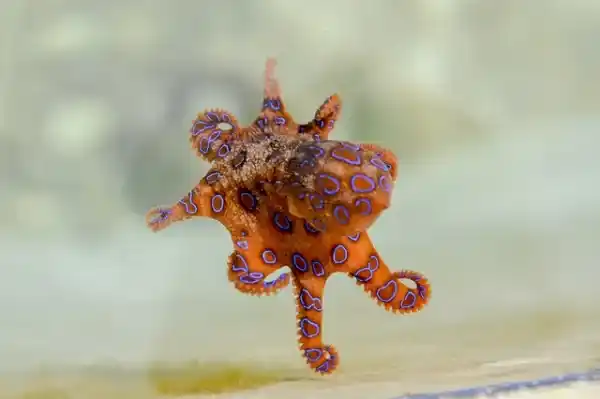
Animals have evolved a variety of sensory abilities in nature to help them adapt to their environment, forage, escape predators, reproduce, and interact. In addition to the five senses commonly found in humans (sight, hearing, smell, taste, and touch), some animals have developed special sensory abilities that exceed human capabilities. The following are the main sensory abilities possessed by animals and their unique evolutionary characteristics:
1. Vision
Vision is one of the primary means of perception for many animals, but there are significant differences in visual abilities among different animals:
a. Ultraviolet vision
Birds , insects (such as bees), and some fish can see ultraviolet light, which helps them perceive colors and patterns invisible to humans when searching for food and mates. Bees use ultraviolet light to see special markings on flowers, helping them find nectar.
b. Infrared vision
Snakes (such as rattlesnakes and vipers) capture their prey by sensing the infrared heat emitted by the prey, especially in dark environments.
c. Multi-directional vision
Insects (such as flies) have compound eyes, which allow them to see almost 360 degrees, helping them to quickly sense danger and escape predators.
d. Night vision capability
Nocturnal animals such as felines and owls have better vision in low-light conditions, and their ability to hunt at night is enhanced by the large number of rod cells in their retina.
2. Hearing
Animals have different hearing ranges; some animals can perceive frequencies that humans cannot hear, such as ultrasound and infrasound .
a. Ultrasonic sensing
Bats , dolphins , and other animals use echolocation to emit ultrasonic waves and receive echoes, which helps them hunt and navigate in the dark or underwater.
Rodents (such as mice) and dogs can also hear high-frequency ultrasound, especially when mating or escaping predators.
b. Infrasound perception
Elephants , whales , and other animals can sense low-frequency sound waves, which can travel long distances, helping them communicate and navigate in a wide range of environments.
3. Sense of smell
Smell is a crucial sense for animals to identify food, predators, other animals, and mates. Some animals have a far more acute sense of smell than humans:
a. hunting dog
Dogs have an extremely sensitive sense of smell, enabling them to detect prey and objects that are far away or hidden, and even substances buried underground.
b. Shark
Sharks can sense even minute amounts of blood and can track injured prey from hundreds of meters away.
c. Ants
Ants use chemosensory to track chemical signals left by their companions by smell, find food sources, and return to their nest.
4. Taste
While many animals rely on their sense of smell to identify food, their sense of taste is also highly developed in some animals:
a.Cat
Cats have a particularly sensitive sense of taste for meat, but they lack the ability to perceive sweetness, which is related to the fact that they are obligate carnivores.
b. Fish
Some fish, such as carp , have taste receptors located on their skin throughout their bodies, which helps them better sense the sources of food in the water.
5. Touch
Touch is an extremely sensitive sense in some animals, helping them perceive changes in their surroundings:
a. Whiskers of felines
A cat 's whiskers are highly sensitive, enabling it to detect subtle changes in its surroundings and helping it move and hunt in the dark.
b. Spider hair
Spiders and some insects sense airflow and vibrations through tiny hairs on their bodies, helping them detect the approach of prey.
6. Magnetic induction
Some animals can sense the Earth's magnetic field and use it for navigation and positioning:
a. birds
Many migratory birds have magnetic induction abilities, enabling them to sense the Earth's magnetic field and helping them navigate during long migrations.
b. Sea turtle
Sea turtles use the Earth's magnetic field to orient themselves when crossing oceans, thus finding their egg-laying sites.
7. Induction
Some aquatic animals can sense electrical signals emitted by other organisms, helping them locate prey or companions in murky water:
a. Electric eel
Electric eels can not only emit powerful electric currents to stun their prey, but they can also sense weak electrical signals from other aquatic creatures, which they use for navigation and hunting.
b. Shark
Sharks ' Lorenzini organs can sense the weak electric fields generated when prey moves, helping them hunt in dark or murky waters.
8. Infrared sensing
Some animals can sense infrared heat emanating from the environment, an ability crucial for nighttime hunting and survival:
a. Snakes
Snakes such as rattlesnakes and pythons use special receptors to sense the heat emitted by their prey, helping them find and capture prey in the dark.
9. Echolocation
Echolocation is a special ability of some animals to perceive their surroundings by emitting sound waves and receiving reflected sound waves.
a. bat
Bats use high-frequency ultrasonic waves to determine the location and distance of prey, which is especially helpful for navigation and hunting when flying at night.
b. Dolphins
Dolphins use echolocation underwater to find food and companions, emitting ultrasonic waves and analyzing the echoes to determine the shape, size, and distance of objects.
10. Vibration sensing
Some animals sense danger or the approach of prey by sensing vibrations:
a. spider
Spiders detect prey by sensing minute vibrations in their webs.
b. Elephant
Elephants can sense low-frequency vibrations on the ground, which helps them communicate over long distances within their groups.
Animals possess far more diverse and complex sensory abilities than humans. Through evolution, different species of animals have developed highly adaptive and unique abilities in areas such as vision, hearing, smell, touch, electro-induction, and magneto-induction. These sensory methods help them survive, reproduce, and maintain the continuation of their populations in their respective environments.
Can any animal see microwaves?
The world we live in is filled with electromagnetic waves of different wavelengths, including visible light, ultraviolet light, infrared light, and microwaves. Humans can only see the visible light portion of electromagnetic waves, while microwaves are invisible to the naked eye. So, are there any animals that can see microwaves?
1. What is microwave?
Before exploring whether animals can see microwaves, let's first understand what microwaves actually are. Microwaves are a type of electromagnetic wave with a relatively long wavelength, ranging from 1 millimeter to 1 meter , falling between infrared and radio waves . The most common application of microwaves is the microwave oven, which uses microwaves to heat food.
Microwave wavelengths are too long to stimulate the visual receptors (photoreceptor cells) in the eyes of humans and most animals, so humans and most known animals cannot "see" microwaves.
2. What electromagnetic waves can animals see?
While no known animal can directly see microwaves, some animals can sense or "see" electromagnetic waves of other wavelengths that are imperceptible to humans. These bands include ultraviolet and infrared radiation , which, although not exactly the same as microwaves, provide clues about how animals perceive electromagnetic waves.
a. Ultraviolet sensing
Some insects, birds, and amphibians can sense ultraviolet light, an electromagnetic wave with a wavelength shorter than visible light. For example:
Bees : Bees can see ultraviolet light, which helps them find nectar in flowers more easily.
Birds : Many birds can see not only visible light but also ultraviolet light, which helps them see different color patterns when foraging and choosing a mate.
b. Infrared sensing
Some animals can sense infrared radiation, an electromagnetic wave with a longer wavelength than visible light. Infrared perception is primarily related to temperature changes, rather than visual perception. For example:
Snakes , such as vipers and rattlesnakes, can sense the infrared heat emitted by their prey's body. This ability helps them hunt in the dark.
Vampire bats : Vampire bats can locate blood vessels by sensing the infrared heat emitted from the surface of their prey.
3. Why can't animals see microwaves?
Microwaves have a relatively long wavelength and low energy, insufficient to excite the photoreceptor cells in an animal's eye. Animal eyes are designed to adapt to specific wavelengths of light. Unlike ultraviolet or infrared radiation, microwaves cannot produce direct visual or thermal sensations.
Furthermore, microwaves have wavelengths so large that the receptors in an animal's body cannot detect the energy fluctuations at these wavelengths, nor do they produce any visible effects .
4. How do animals perceive other signals in their environment?
Although animals cannot see microwaves, they have many other ways of perceiving signals in their environment, including sound, temperature, smell, and electromagnetic fields.
Electrosensory perception : Some aquatic animals, such as sharks and electric eels, are able to sense minute changes in the electric field inside their prey through electrosensors.
Magnetosensing : Some birds and turtles use the Earth's magnetic field for navigation, especially during migration.
5. Potential Changes from Future Scientific Development
With the development of science and technology, future research may reveal more about how animals perceive electromagnetic waves. Currently, no known animal can directly perceive microwaves, but the discovery of more complex sensory systems in nature could change our understanding of animal sensory abilities.
Currently, no known animal can see microwaves . Microwaves are a type of electromagnetic wave with a relatively long wavelength and low energy, exceeding the range of perception of the photoreceptor cells in animal eyes. However, many animals can perceive other electromagnetic waves invisible to humans, such as ultraviolet and infrared radiation, which helps them play an important role in foraging, reproduction, and survival.
If future scientific research reveals more complex sensory systems, we may discover that animals' ability to perceive the environment far exceeds our current understanding. However, for now, microwaves remain a band that neither the human nor animal visual systems can detect.
Which animals can hear infrasound and ultrasound?
In nature, animals have different hearing abilities. Some animals can hear sound frequencies that are imperceptible to humans, including infrasound and ultrasound . This special hearing ability helps them gain an advantage in areas such as foraging, escaping predators, and communication.
1. What are infrasound and ultrasound?
Infrasound : Sound with a frequency below 20 Hz, below the range of human hearing. Infrasound has a long wavelength, travels a long distance, and can penetrate obstacles.
Ultrasound : Sound with a frequency higher than 20,000 Hz, which is above the range of human hearing. Ultrasound has a short wavelength, enabling precise object location and is widely used for animal navigation and hunting.
2. Which animals can hear infrasound?
Animals that can hear infrasound typically live in vast environments, such as grasslands or oceans, or are animals that need to communicate over long distances.
a. elephant
African and Asian elephants are prime examples of infrasound hearing. They can communicate over long distances using low-frequency sounds that can travel for kilometers, helping elephant herds maintain contact, especially when foraging, breeding, and defending against predators. The low-frequency calls of elephants can even be transmitted through the ground and perceived by other elephants.
b. Whale
Some whales , especially blue whales and humpback whales , are able to communicate underwater over long distances using infrasound. This low-frequency sound can penetrate seawater, helping whales find mates or communicate reproductive behaviors in the ocean.
c. Giraffe
Giraffes can also communicate using infrasound. Because they live on vast grasslands, infrasound helps maintain communication between groups, especially when facing danger or migrating.
d. Crocodile
Crocodiles can hear infrasound, especially during the mating season, when they use infrasound waves to attract mates. This ability helps them communicate and locate themselves at low frequencies underwater.
3. Which animals can hear ultrasound?
Many animals rely on ultrasound for navigation, hunting, or communication, especially those species that live at night or rely on high-precision positioning.
a. bat
Bats are a prime example of echolocation. They use echolocation , emitting ultrasonic waves and capturing the reflected sound waves to determine the location, size, and flight speed of their prey. This allows them to easily hunt insects at night or in dark environments.
b. Dolphins
Dolphins also use echolocation to emit ultrasonic waves for navigation and hunting. Dolphins' ultrasonic ability is especially useful in murky waters, where they perceive their surroundings by emitting high-frequency sound waves and receiving echoes, and can even "see" prey hidden in the sand.
c. Dogs
Dogs have a wider range of hearing than humans, and can hear high-frequency sounds, including some ultrasonic waves. This is why dog whistles can get their attention, while humans cannot hear such sounds.
d.Cat
Like dogs, cats can hear high-frequency sounds that are inaudible to humans. They can sense ultrasound, which helps them locate the activity of small rodents when hunting.
e. Rodents
Rodents such as mice and hamsters can also emit and hear ultrasonic waves. This ability helps them communicate within their groups, especially to avoid predators and to find mates during the breeding season.
f. Insects
Some insects, such as moths , can detect the ultrasonic waves emitted by bats and use this information to escape predation. Their auditory systems can detect the echolocation signals of bats, allowing them to react quickly and escape.
4. Animal applications of infrasound and ultrasound
a. Applications of infrasound
Long-distance communication : Elephants and whales use infrasound to communicate over long distances, especially when crossing vast grasslands or oceans.
Transmitting threat signals : Elephants and crocodiles use infrasound to send threat or defense signals to protect their territory or attract mates.
b. Applications of ultrasound
Echolocation : Bats and dolphins are experts in echolocation, able to accurately locate prey in complex or dark environments using ultrasound.
Predation and escape : Cats and dogs enhance their hunting abilities by sensing ultrasound, while some insects use ultrasound to escape predators.
in conclusion
Animals in nature have evolved a series of sophisticated auditory systems that help them gain an advantage in survival and reproduction. Elephants and whales use infrasound for long-distance communication, while bats and dolphins use ultrasound for precise echolocation. Although the range of human hearing is limited, by observing and studying the special abilities of these animals, we can better understand and utilize the power of sound.