Pelegrisaurus is a fascinating and relatively little-known genus of sauropod dinosaurs that roamed the Earth during the Late Cretaceous. Despite its obscurity, Pelegrisaurus offers paleontologists a unique perspective on the evolution and diversity of giant herbivorous dinosaurs. This article delves into Pelegrisaurus , including its discovery, physical characteristics, habitat, and role in the Late Cretaceous ecosystem. Whether you're a dinosaur enthusiast or an aspiring paleontologist, you'll gain insights into why Pelegrisaurus is an important part of the sauropod family tree.
What is Pellegrinosone?
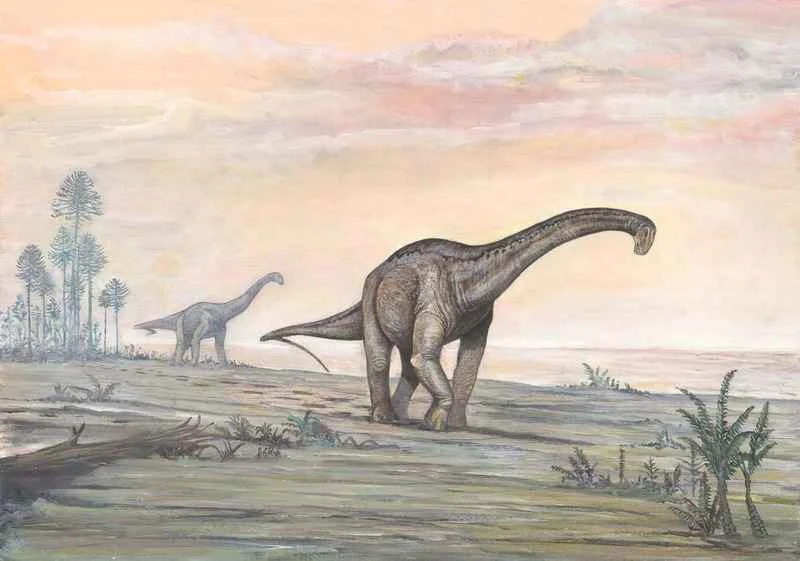
Pelegrisaurus was a titanosaur sauropod that lived during the Late Cretaceous period (approximately 70 to 85 million years ago). This enormous dinosaur belonged to the titanosaur group, which includes some of the largest land animals to ever walk on Earth.
Scientific name : Pellegrinisaurus poweri
Classification : Sauropods, Titanosaurs
Period : Late Cretaceous
Diet : Herbivorous
Location : Fossils found in South America, particularly in Argentina.
Pellegrinosaurus is known for its enormous size, long neck, and powerful limbs—typical characteristics of Titanosaurs. Its discovery provides invaluable information about the diversity of Titanosaurs on the southern supercontinent Gondwana, which included modern-day South America.
The discovery of Pellegrinion
Where was Pellegrinosaurus discovered?
The remains of Pellegrinosaurus were discovered in the Neuquén Basin of Patagonia, Argentina, a region renowned for its rich fossil deposits. This area is a hotspot for Late Cretaceous dinosaurs and has yielded many important discoveries, particularly those related to Titanosaurs.
Who discovered Pellegrinione?
Argentine paleontologist Jorge Calvo described and named Pellegriniosaurus in 1996. The genus name is named in honor of Pellegrini, a region in Argentina, while the species name Poweri is in recognition of the contributions of local geologists.
Fossil evidence
The fossil material of Pellegriniosaurus includes:
Part of the vertebrae (vertebrae)
Limb part (part of its enormous limbs)
Although the fossils are fragmented, they still provide important insights into the anatomy and size of this giant sauropod. Other fossils from the region have helped paleontologists compare Pellegriniosaurus with other Titanosaurs, revealing their evolutionary relationships.
Physical characteristics of Pellegrino
Size and dimensions
Like other titanosaurs, Pelegris was a massive dinosaur, though its exact size remains a subject of speculation due to incomplete fossil evidence. Paleontologists estimate that Pelegris may have been about 20 to 25 meters (65 to 82 feet) long and weighed about 20 to 30 tons .
Neck : Long and flexible, allowing it to reach vegetation over a wide area.
Tail : Strong and whip-like, possibly used for balance and defense.
Limbs : Strong and columnar, designed to support its enormous weight.
Vertebral structure
The vertebrae of Pellegrinosaurus have typical characteristics of Titanosaur:
Large, hollow sections can reduce weight while maintaining strength.
The unique ridges and protrusions provide support for the muscles and ligaments.
Skull and teeth
Although no skull material has been attributed to Pelegris , paleontologists speculate that it shared similarities with other titanosaurs. Its teeth were likely peg-shaped or spoon-shaped , ideally suited for plucking leaves from trees and ferns.
Movement and Posture
As a large quadrupedal herbivore, Pelegrisaurus relied on its strong legs and large feet to traverse its environment. Its relatively light vertebrae gave it greater flexibility, making it more efficient at foraging.
Habitat and Environment of Pellegrinosaurus
Late Cretaceous South America
During the Late Cretaceous period, South America was part of the supercontinent Gondwana. Pellegriniosaurus lived in a warm, humid environment teeming with diverse life forms.
Plants : conifers, ferns, cycads, and early-flowering plants.
Animals : Other dinosaurs, such as carnivorous theropods, small herbivorous dinosaurs, pterosaurs, and early mammals.
Ecosystem role
Pellegrinosaurus , as a primary herbivore, plays a vital role in its ecosystem. It feeds on plants and helps shape the landscape by controlling plant growth and promoting nutrient cycling.
Foraging behavior : They may forage in groups at the treetops and on the ground.
Predator-prey dynamics : Large theropod dinosaurs, such as Giganotosaurus or Mapusaurus , may have preyed on juvenile or diseased Pellegrinosaurus individuals.
Pellegrinosaurus and its relationship with other Titanosaurs
Titanosaur: A giant herbivore
Titanosaurs were a diverse group of sauropods that dominated the Late Cretaceous. They were characterized by their enormous size, hollow vertebrae, and unique limbs.
Pellegrinosaurus belongs to this group and shares many similarities with its Titanosaur relatives, for example:
Argentinosaurus : One of the largest known dinosaurs, also from South America.
Saltasaurus : A small, armored titanosaur.
Futalogosaurus : Another giant sauropod dinosaur discovered in the Neuquén Basin.
Unique characteristics of Pellegrino
Although Pelegrisaurus shares characteristics with other Titanosaurs, its vertebrae possess unique adaptations that distinguish it from its relatives. Further discoveries may reveal more features and clarify its evolutionary position within the Titanosaurs.
The Importance of Pellegrinosaurus in Paleontology
Learn about the evolution of Titanosaurs
The discovery of Pellegrinosaurus provides invaluable information for understanding the diversity and distribution of titanosaurs in South America. By studying its vertebrae and limb bones, paleontologists can gain deeper insights into:
Evolutionary adaptations that enabled Titanosaurs to thrive and reproduce.
How sauropods dispersed across Gondwana during the Cretaceous period.
Contributions to South American paleontology
South America has proven to be a treasure trove of Titanosaur fossils, and Pellegriniosaurus is one of the increasingly important discoveries. Its fossils help to provide a clearer picture of the region's Late Cretaceous ecosystem.
Soft tissue speculation
Although the soft tissue of Pellegriniosaurus was not preserved, its relatives provide clues about skin texture and muscles. Titanosaurs like Saltasaurus are known to have bony plates, which raises the question of whether Pellegriniosaurus might have possessed similar features.
Interesting facts about pellegrinione
Origin of the name : "Pellegrini" pays homage to the Pellegrini region of Argentina, reflecting its local significance.
Titanosaurs : This family belongs to the Titanosauridae group, which includes the largest land animals ever to have existed.
The South American giant : Its fossils were discovered in the Uquén Basin, a hotspot for dinosaur discovery.
Weight optimization : Hollow vertebrae help reduce weight while supporting the large body.
Herbivore advantage : As a giant herbivore, Pellegrino helps shape its ecosystem by consuming large amounts of vegetation.
Conclusion: Pellegrini's Legacy
Pellegrisaurus is a magnificent testament to the diversity of titanosaur sauropods that once roamed the Earth. Although its fossils are fragmentary, they provide paleontologists with invaluable insights into the anatomy, ecology, and evolution of Late Cretaceous South American titanosaurs.
By answering questions about its size, habitat, and evolutionary relationships, Pelegrisaurus enriches our understanding of prehistoric life and the Gondwana ecosystem. As future discoveries unfold, this remarkable dinosaur is likely to continue to reveal new secrets about the ancient world, solidifying its place in the fascinating history of paleontology.
For anyone who loves dinosaurs, Pellegrinosaurus serves as a reminder of the incredible diversity and scale of life that once thrived on Earth.