Mimicry is a marvel of evolution; organisms can imitate unrelated species—a clever evolutionary strategy. Leaf mimicry is a particularly ingenious form of camouflage, providing animals with protection from hungry predators. Simultaneously, for other animals, it's an effective strategy for silently waiting for prey in plain sight. Leaf mimicry is most common in insects, but this adaptation can also be observed in reptiles, amphibians, and even fish. Below are nine surprising examples of leaf mimicry from around the world, showcasing the unique survival strategies animals have evolved to adapt to their environments.
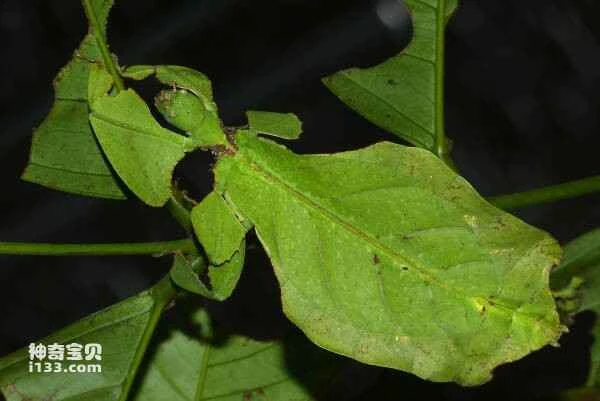
1. Giant leaf insect (Phyllium giganteum)
This leaf-bearing insect is most abundant in the tropical western region of Malaysia. Females have large elytra with edges close to the abdomen and often lack hindwings, which typically prevents them from flying. Males have small elytra and sometimes transparent, non-leaf-like functional hindwings. Most leaf-bearing insects found in the wild are female; the first male of this species was not discovered until 1994. In captivity, this species primarily reproduces through parthenogenesis, meaning females reproduce asexually. The dominant reproductive pattern in the wild is unclear. Eggs are often brown or black, glossy, and seed-like. They hatch approximately six months after mating. Newly hatched nymphs are often wingless and brown or reddish in color. They turn green after feeding on leaves. The main herbaceous food source for this species is oak and thorny leaves.
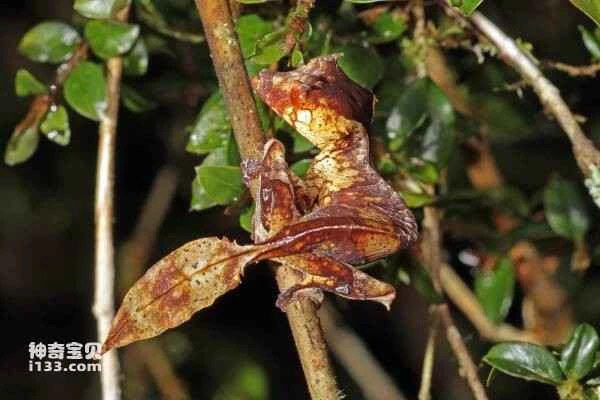
2. Satanic Leaf-tailed Gecko (Uroplatus phantasticus)
The Satanic Leaf-tailed Gecko, also known as the Eyelash Leaf-tailed Gecko or Dream Leaf-tailed Gecko, is a species endemic to Madagascar. A nocturnal reptile with moderately large eyes, it is active in its rainforest habitat at night, feeding on insects. Sticky scales under its fingers and toes, along with strong, curved claws, allow it to move skillfully through the forest. Leaf-tailed geckos are experts at evading predators, not only through their incredible mimicry but also through numerous behaviors. They can press their bodies against the substrate to reduce their shadow, open their jaws to reveal a fearsome bright red mouth, and voluntarily shed their tails to deceive predators.
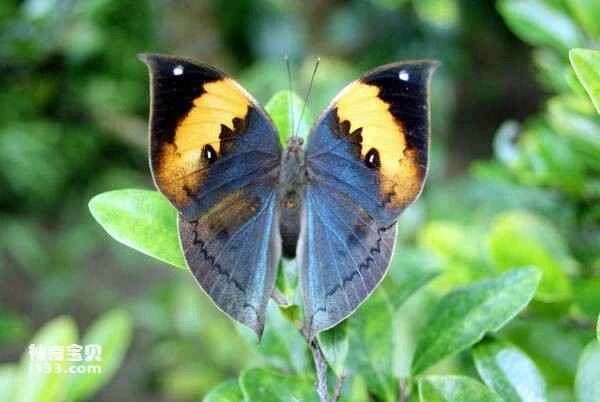
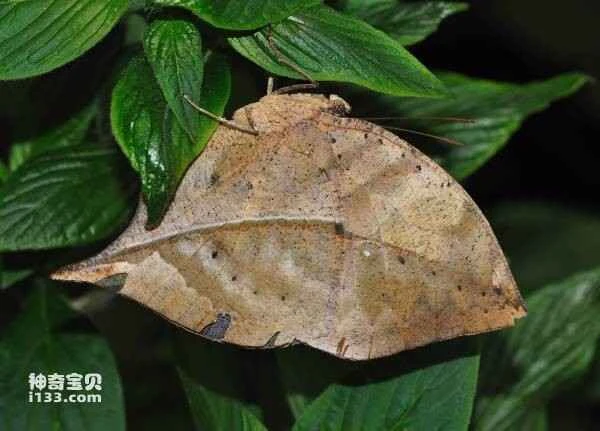
3. Indian Oak Leaf Butterfly (Kallima inachus)
The Indian Oak Leaf is a nymphal butterfly whose wings, when closed, closely resemble a dried leaf with dark veins, making it a frequently cited example of camouflage. When the wings are closed, only the mysterious underside markings are visible, consisting of irregular patterns and stripes in colors ranging from biscuit brown, pale yellow, brown, yellow, to black. The veins darken, mimicking those of a leaf. Its resemblance to a dried leaf (masquerade) is so striking that it has earned the genus the common name "Oak Leaf" or "Dead Leaf." When the wings are open, the forewings exhibit a black tip, orange bands, and a dark blue base. There are two white eyes, one along the edge of the black band at the tip, and the other bordering the orange and dark blue area. The hindwings are a more uniform blue, but with brown spots scattered along the toes.
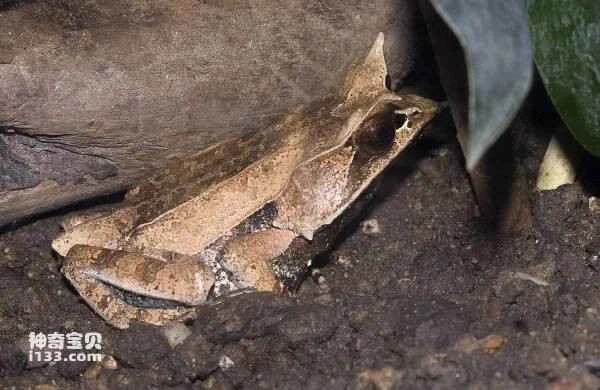
4. Malayan Leaf Frog (Megophrys nasuta)
The Malayan leaf frog, also known as the long-nosed horned frog, is endemic to the rainforests of the Malay Peninsula, Sumatra, and Borneo. This species is a large frog, measuring 100-120 mm in length. Their backs are light to dark brown with various patterns, providing excellent camouflage against the forest floor. The throat is black to dark brown, fading to a creamy yellow along the mid-ventral side. The upper eyelids and nose are elongated into triangular protrusions, forming what resemble "horns," hence their common name. This species may lie quietly on the forest floor, waiting for unsuspecting prey to pass by before launching a fierce attack and devouring it. They typically feed on spiders, small rodents, lizards, and other frogs.
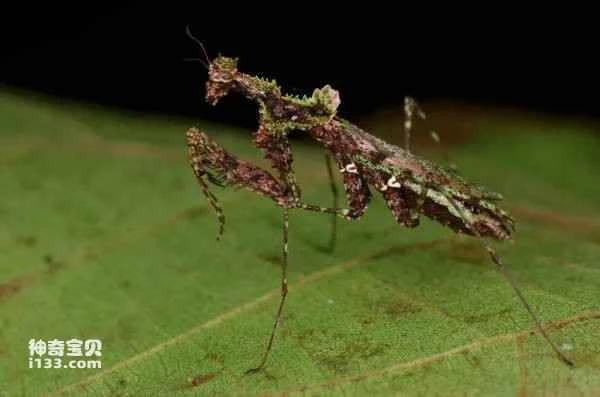
5. Trychopeplus laciniatus (bryophyte stick insect )
Stick insects are herbivorous insects known for their ability to mimic twigs or leaves, helping them evade predators. There are approximately 2,500 species worldwide. The bryophyte stick insect is one such species. It is wingless, has highly curved antennae, a high-arched back, and a somewhat devilish appearance. Their body color varies depending on the insect, generally being greenish-brown, greenish-brown, or brown. They are about 8-9 cm long. Because they maintain a highly curved and wrinkled body shape while alive, accurate measurement is very difficult. However, this shape helps them blend well into their environment and remain difficult to spot.
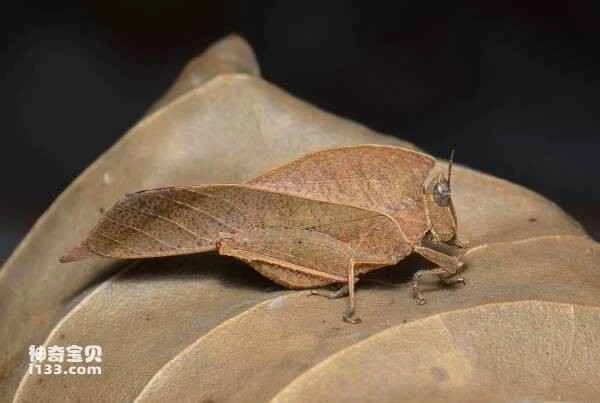
6. Dead Leaf Grasshopper (Chorotypus saussurei)
The dead leaf grasshopper is native to Malaysia. Among the world's small grasshoppers, few exceed 20.0 mm in length. Many are well-camouflaged as fallen bark flakes, rotting stick fragments, and dead leaf pieces. Most are terrestrial, but many are semi-aquatic.
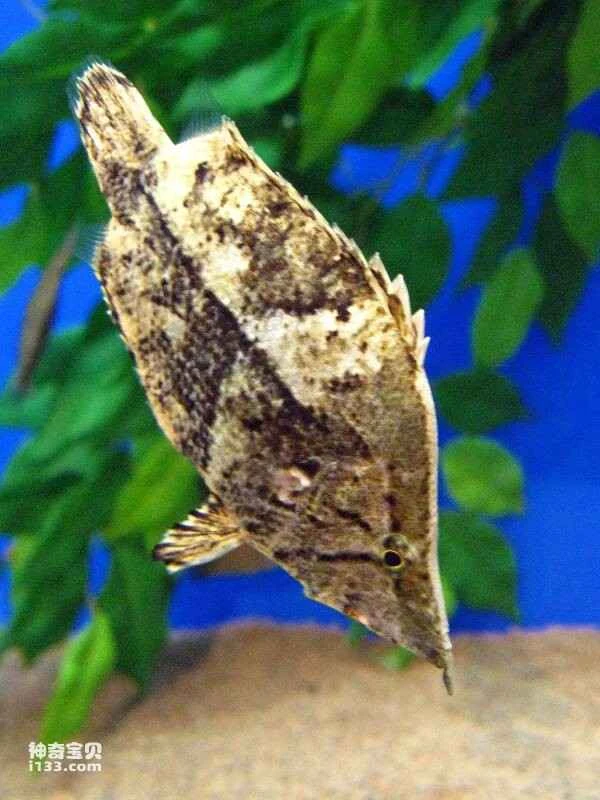
7. South American leaf fish (Monocirrhus polyacanthus)
The South American leaffish is found in the Amazon basins of Bolivia, Brazil, Colombia, Peru, and Venezuela.[1][2] It inhabits the edges of rivers, lakes, and streams. It is typically a low-density species, living in slow-moving or essentially stagnant waters with plant debris. The maximum standard length of the South American leaffish is 8 cm. As its common name suggests, it closely resembles a dead leaf. Its flattened body and the filaments (similar to stems) at the tip of its lower jaw further enhance its resemblance to a leaf. It is grayish-brown, but some degree of color variation is possible. It has no lateral line, and its large mouth can extend up to 60% of its head length.
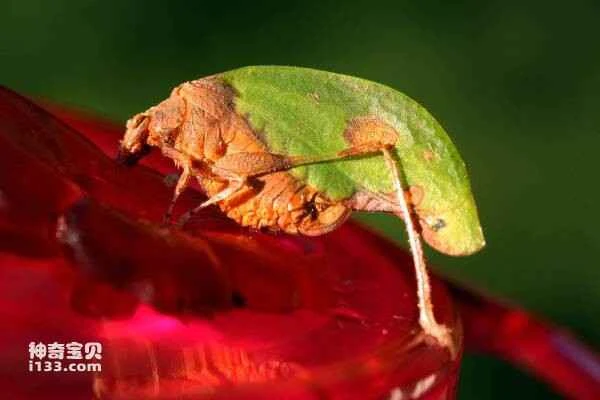
8. Leaf grasshopper (Pycnopalpa bicordata)
The leaf katydid is a species in the Tettigoniidae family of the order Orthoptera. They are nocturnal. Individuals can grow up to 85 mm long. It still looks very much like a leaf—with bright green wings and brown edges around transparent cells, representing parts of leaf tissue that have been consumed or sunburned. However, the adult stage pales in comparison to the ingenious structural design of the nymph.
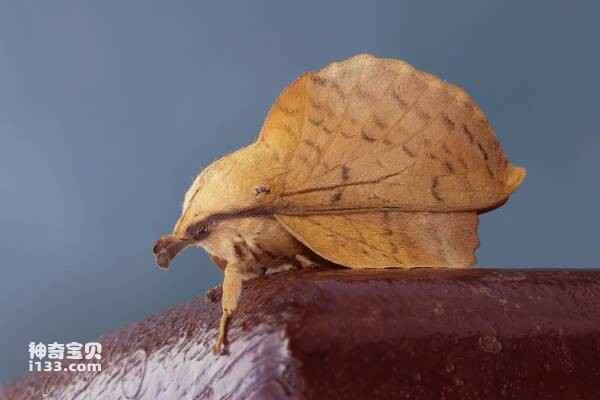
9. Leaf-killing moth (Uropyia meticulodina)
Leaf moths belong to a family of Lepidoptera, mostly medium to large-sized moths distributed across continents excluding Antarctica, with the greatest diversity found in the tropical regions of the Old World. Many species are entirely brownish-brown, remaining motionless when resting, their hindwings often protruding beyond the forewings to form a roof-like shape, resembling a dead leaf, hence their name. Adults are mostly nocturnal, with nearly or completely degenerate mouthparts, unable to feed, and therefore have short lifespans. Larvae are covered in bristles, sometimes with poisonous hairs, which can cause skin irritation in humans. Larvae feed on leaves, consuming large amounts and having a wide range of food sources; some gregarious species are considered number one forest pests in certain regions.