The debate about whether dragons truly existed has never ceased. Whether dragons actually existed is a difficult question to answer, but there are indeed some animals in this world that resemble dragons, either partially or entirely. For example, the axolotl we're introducing today possesses many dragon-like characteristics.
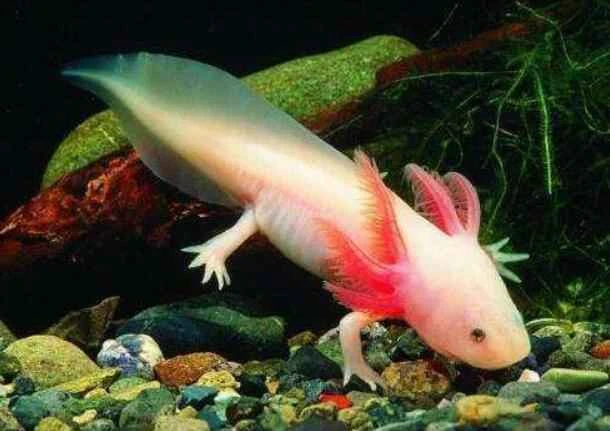
Beautiful axolotl
It's important to note that the axolotl isn't actually a fish; it's just given a fish-like name. Biologically, it belongs to the family Salamanderidae within the class Amphibia. While there are many species of salamanders in the world, the axolotl, with its unique appearance, has become one of the most famous, valuable, and popular. It's highly sought after in the global aquarium pet market.
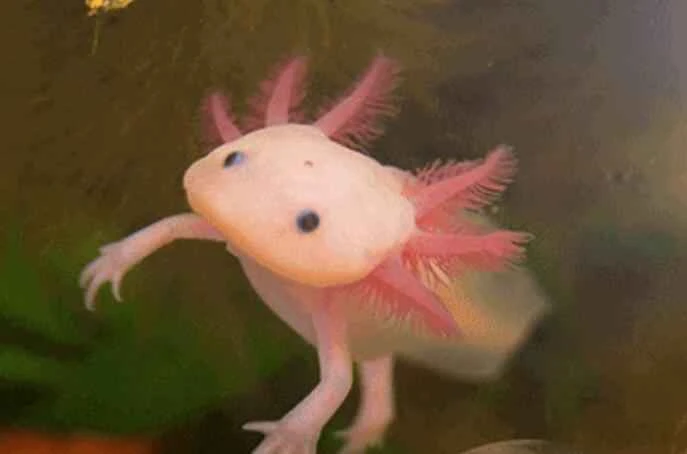
A close-up of the head of an axolotl
So, what similarities do the axolotl share with dragons? First, the head. Legend says dragons have horns, and the axolotl also has six horns, somewhat resembling those of a dragon. Second, dragons have claws on their long bodies (divided into five-clawed, four-clawed, and three-clawed dragons), and the axolotl also has four claws. Furthermore, the dragon's tail is very similar to the axolotl's tail!
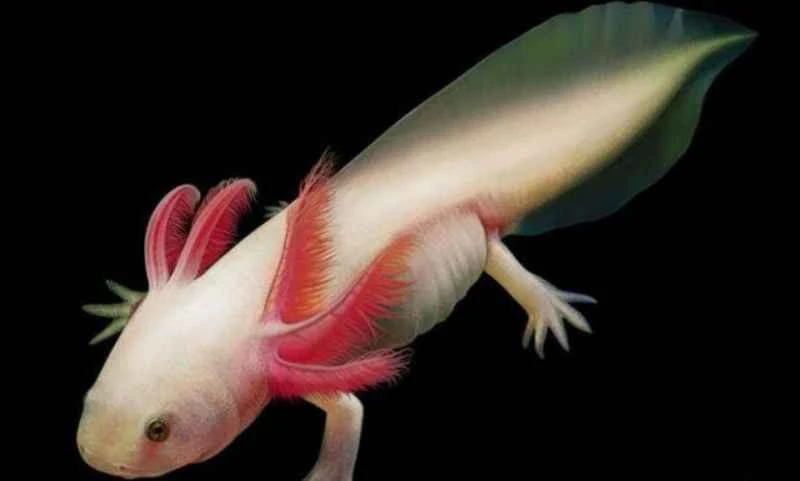
Axolotl's claws
However, unlike the enormous body of the dragon, the axolotl, despite having "dragon" in its name, is quite small. Juvenile axolotls are only about 12 millimeters long, while adults are mostly around 18 centimeters long, with the longest recorded being only a little over 20 centimeters.
While axolotls may not compare to the legendary dragons in size, they possess unique abilities. Their regenerative capacity is remarkable; as long as the head is undamaged, most parts of their body can recover quickly from injury. An experiment was conducted where four limbs were removed from an axolotl. Within just over three months, the severed limbs had regrowed.
Furthermore, the axolotl is a truly ancient species. According to modern scientific analysis, this peculiar salamander has existed for at least tens of millions of years. Remarkably, this long period has not caused any changes to its body. The more than thirty species of axolotls currently existing in the world (according to 2009 statistics; some species may now be extinct) all maintain the same form as their original ancestors, which is truly a miracle in biological history.
The first need of life is survival. Every species has the right to ensure its own survival. For each of us, respecting life is respecting ourselves.